
September 2026 Eurotunnel delays cannot be reduced to a single published waiting time: LeShuttle has not announced a month-long closure or a fixed programme of major disruption at Folkestone. For Ashford drivers, the normal road journey to the terminal takes roughly 25 to 35 minutes in clear traffic, but that figure does not include check-in, UK and French border controls or boarding. LeShuttle tells passengers to reach its terminal at least one hour before the booked departure, making 90 minutes before departure a realistic minimum time to leave Ashford in normal conditions. On Friday afternoons, September weekends or days carrying live disruption warnings, a two-hour margin is safer, Ashford Chronicle reports.
The position on the EU Entry/Exit System is more specific. LeShuttle states that no EES biometric capture will take place at its Folkestone or Calais terminals during the summer 2026 holiday period, allowing customers to pass through the terminals under the usual process. The operator has not defined on its public page exactly which September date ends that arrangement, so travellers later in the month should check the booking message and live terminal guidance. Where EES registration is active, British and other non-EU passengers may need a passport scan, facial image and, for travellers aged 12 or over, fingerprints before leaving the UK.
For most Ashford departures, the useful planning figure is 90 minutes from leaving home to the booked Folkestone departure, not 30 minutes for the motorway alone.
How long should Ashford drivers allow for Eurotunnel in September
Drivers should separate the journey into three parts: the road from Ashford, terminal processing and the wait to board. The road section is the shortest and usually the most predictable. From the Ashford area, the standard route uses the M20 coastbound to Junction 11A, followed by the signed entrance to the LeShuttle passenger terminal.
LeShuttle requires customers to check in at least one hour before their booked departure and no more than four hours before it. Its public travel guidance also tells passengers to complete Advance Passenger Information for everyone in the vehicle before arriving, normally at least 24 hours before travel. A car reaching the terminal entrance only 30 or 40 minutes before departure therefore risks missing the required check-in point even when there is no queue on the M20.
A practical Ashford to Folkestone travel time should be calculated as follows:
| Conditions | Leave Ashford before departure | Reason |
|---|---|---|
| Quiet weekday, no live warnings | 90 minutes | 25–35 minutes driving plus the required one-hour terminal arrival |
| Friday afternoon or Sunday return period | 1 hour 45 minutes | Extra capacity for M20 and terminal queues |
| School-holiday crossover or busy weekend | 2 hours | Higher passenger volumes and less recovery time |
| Live LeShuttle delay or M20 incident | 2 hours plus reported delay | The operator’s live estimate must be added |
| Passenger needs assistance or extra document checks | At least 2 hours | More time may be needed before boarding |
These figures apply to cars starting in or near Ashford rather than vehicles entering Kent from London. A driver already facing congestion west of Junction 10 needs to add that delay separately. The one-hour LeShuttle requirement begins at the terminal, not when the vehicle leaves home.
The operator’s terms allow check-in up to four hours before departure, but arriving several hours early is not a reliable method of avoiding congestion. An earlier train may be offered only when space is available and the ticket conditions permit it. Drivers should aim for a controlled margin rather than treating the terminal as an unrestricted waiting area.
“Aim to arrive at the terminal at least 1 hour before departure.” (LeShuttle, on-the-day passenger guidance for 2026)
The 35-minute Channel Tunnel crossing begins after vehicles have checked in, cleared both border controls, waited for a boarding call and driven onto the train. It should not be used as the total journey time from Folkestone arrival to Calais exit. LeShuttle markets the rail crossing itself as a 35-minute trip, but terminal time remains additional.
What September 2026 Eurotunnel delays should travellers expect
There is no official forecast stating that every September departure will run late by a particular number of minutes. LeShuttle publishes live conditions for check-in, border controls and departures, which can change during the day. Its status page may show a normal service while individual trains are rescheduled, meaning passengers need to read both the headline status and the departure information attached to their boarding code.
September is normally less concentrated than the main July and August getaway, but the first part of the month still overlaps with family returns, late summer holidays and cross-Channel weekend traffic. Pressure can also rise around Friday evening departures from Folkestone and Sunday services from Calais. Ticket availability published for travel to 30 September shows that some lower fares are concentrated before 05:00 or after 18:00, reflecting the operator’s use of time-based pricing and capacity management.
The most common sources of delay are:
- heavy arrival volumes at the Folkestone check-in lanes;
- queues at UK exit and French juxtaposed border controls;
- late inbound trains affecting the next departure cycle;
- technical problems involving trains, tracks or terminal equipment;
- M20 collisions or lane closures near Junction 11A;
- additional document checks for passengers, pets or vehicles;
- temporary lane reductions inside the terminal.
A delay at one point does not always produce the same wait for every passenger. A 30-minute departure delay may allow more time for border processing, while a check-in queue can affect vehicles before they receive a boarding allocation. Flexiplus customers may receive priority in designated parts of the terminal, but LeShuttle says there is no separate Flexiplus area once vehicles enter the EES-controlled zone.
The published departure delay is only one part of the wait; an Ashford driver may also encounter road, check-in and border queues before reaching the boarding area.
Will EES cause extra delays at Folkestone in September
The EU Entry/Exit System records the border movements and biometric data of many non-EU nationals making short visits to the Schengen area. For a first registration, the process can include a passport scan, a facial photograph and fingerprints for adults and children aged 12 or over. At juxtaposed controls such as Folkestone, registration takes place before the traveller leaves Britain.
LeShuttle’s summer 2026 notice says biometric capture will not take place at Folkestone or Calais during the summer holiday period. Customers can therefore use the normal terminal process while that temporary arrangement remains in force. The operator has built a dedicated pre-registration area with self-service kiosks for EES checks once biometric processing applies.
The unresolved point for September travellers is the end date of the summer arrangement. LeShuttle’s public notice does not state that biometric capture is suspended for the whole calendar month. A family travelling on 5 September may therefore receive different instructions from one booked for 29 September if the French authorities activate the system between those dates.
Drivers should check three places before leaving Ashford:
- The latest message attached to the LeShuttle booking.
- The operator’s live departure and terminal-status page.
- Current UK government EES guidance for travellers to France.
The official government guidance says EES checks should take only a few minutes per person, while acknowledging that longer border waits are possible. In a car carrying four or five first-time registrants, even short individual checks can increase total processing time. That is why a two-hour Ashford departure margin becomes more appropriate when a booking notice confirms that biometric enrolment applies.
“EES checks should take only a few minutes per person, although longer waits at border control are possible.” (UK government travel guidance, 26 March 2026)
A previous EES registration may reduce the amount of new information required on later journeys, but passengers can still be asked to scan a passport and provide a biometric check. Registration is free. Websites asking travellers to pay a fee simply to join EES should not be treated as part of the official process.
Which route should Ashford drivers take to LeShuttle
The normal route is the M20 coastbound from Ashford to Junction 11A. LeShuttle’s passenger terminal has a dedicated motorway junction and should be approached through the signed entrance rather than through Folkestone town centre. Drivers from south and east Ashford will often join the M20 at Junction 10A, while central or west Ashford traffic may use Junction 10.
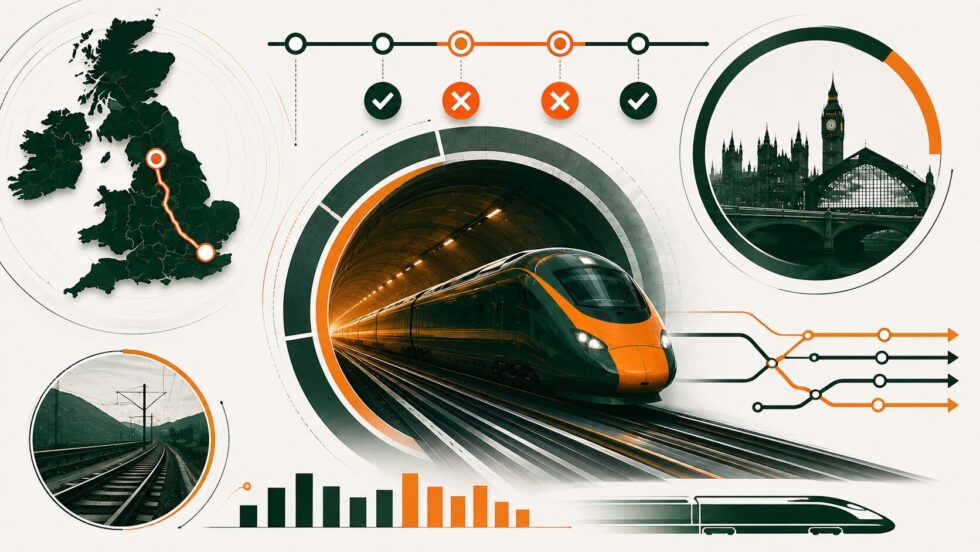
The route is:
- Join the M20 coastbound towards Folkestone and Dover.
- Continue past Junction 11 for Westenhanger and Hythe.
- Leave at Junction 11A for the Channel Tunnel terminal.
- Follow signs for passenger check-in rather than freight.
- Enter the lane matching the vehicle and ticket instructions.
Junction 11A is east of the main Ashford exits and west of the final Folkestone motorway junctions. Drivers should not leave early for local roads simply because a navigation application shows slow traffic approaching the terminal. Local routes around Cheriton have limited capacity and may return vehicles to the same terminal queue at a less convenient point.
The Eurotunnel route from Ashford also sits east of the usual Operation Brock contraflow between M20 Junctions 8 and 9. Ashford drivers joining at Junction 10 or 10A normally begin beyond that section. They may still encounter freight traffic, temporary controls or an incident closer to Folkestone, but driving west towards Junction 9 does not provide a useful bypass.
National Highways uses its Operation Brock page to show whether the M20 is fully open, running with a contraflow or subject to closures during installation and removal. When the contraflow operates normally, non-port traffic can continue in both directions, while EU freight follows the designated M20 and A20 arrangements.
| Starting point | Recommended entry | Route to terminal |
| South or east Ashford | M20 Junction 10A | M20 coastbound to Junction 11A |
| Central Ashford | Junction 10 or 10A | Choose according to live local traffic |
| West Ashford | M20 Junction 9 or 10 | Avoid Junction 9 when Brock creates delays |
| Canterbury side | A28 or A2 connection | Use live navigation before joining M20 |
The A20 through Folkestone is not the preferred normal route for passengers approaching from Ashford. It can become congested around Cheriton and local junctions, while the M20 provides direct access to the terminal. A local diversion is justified only when police, National Highways or LeShuttle instructs drivers to use it.
What should drivers do when LeShuttle reports a delay
A live delay does not automatically mean passengers should leave home later. LeShuttle still needs vehicles to complete check-in, border control and boarding in the correct sequence. Unless the operator changes the official arrival instruction, Ashford travellers should continue to target the required terminal check-in time and add the reported delay to plans for onward travel in France.
The live page divides conditions into check-in, border controls and departures. “Service running normally” may sit alongside a warning that certain lanes are closed or that an individual train has moved to a later time. Drivers should use the booking reference or boarding code where available rather than relying only on the general status banner.
A sensible response depends on the delay:
- Up to 30 minutes: leave Ashford at the planned time and expect a longer terminal wait.
- 30 to 60 minutes: keep the check-in margin and move any tight onward appointment.
- More than one hour: check for direct instructions, fuel the vehicle and prepare for a prolonged wait.
- M20 closure: follow the official diversion rather than a terminal shortcut.
- Cancelled or suspended service: contact LeShuttle before beginning a long diversion to Dover.
Passengers who arrive late may miss their allocated departure and face a change of train, fare conditions or further disruption. LeShuttle advises customers running late to contact its service team, but it does not guarantee immediate boarding on the next available train.
Food, drinking water, medication and children’s essentials should remain accessible inside the car. Passports, booking details, vehicle documents and pet paperwork should be prepared before the terminal queue. Searching through a packed boot at the control point delays the vehicle and those behind it.
Is early morning the best time to leave Folkestone
LeShuttle describes departures between midnight and early morning, and again late in the evening, as generally quieter periods on some of its travel guidance. Its fare information for September also places a number of lower-priced departures before 05:00 or after 18:00. These signals do not guarantee an empty terminal, but they show that mid-morning to late-afternoon departures can carry stronger demand.
For Ashford households, a very early train can reduce exposure to local commuter traffic and daytime terminal volumes. It also requires careful calculation because check-in may begin around an hour before departure. A 05:00 train means reaching the terminal by approximately 04:00 and leaving Ashford near 03:25 or earlier.
Evening departures can offer lower demand, but they carry a different risk. An operational problem earlier in the day may continue into the evening timetable. Drivers with a long onward journey through France must also account for fatigue, fuel stops and overnight road conditions after leaving Calais.
The best departure is the one with enough recovery time on both sides of the Channel, not simply the cheapest late-night slot.
Questions and answers about September Eurotunnel delays
How early should Ashford drivers leave for Eurotunnel?
In normal traffic, leaving Ashford 90 minutes before the booked departure provides roughly 30 minutes for the drive and the one-hour terminal arrival required by LeShuttle. A two-hour margin is safer for Friday afternoons, weekends, EES processing or live disruption.
How long does it take to drive from Ashford to Folkestone?
The motorway journey commonly takes around 25 to 35 minutes in clear conditions. This does not include check-in, passport control, terminal waiting or boarding.
Are Eurotunnel services disrupted throughout September 2026?
No month-long closure or fixed September-wide delay has been announced. Conditions vary by date and departure, so passengers need the live LeShuttle status shortly before travel.
Will EES checks operate at Folkestone in September?
LeShuttle says no biometric capture will take place during the summer 2026 holiday period, but its public notice does not specify whether that exemption covers all of September. Travellers should follow the instructions attached to their booking.
How long do EES checks take?
UK government guidance says the checks should take only a few minutes per person, although longer queues are possible. First-time registration may require a passport scan, facial image and fingerprints for passengers aged 12 or over.
Which M20 junction serves the Eurotunnel terminal?
Passenger vehicles should leave the M20 at Junction 11A and follow signs for LeShuttle passenger check-in. Freight and passenger traffic use different terminal areas.
Does the 35-minute crossing include terminal waiting?
No. The 35 minutes refers to the train journey through the Channel Tunnel. Check-in, border controls, boarding and the drive out of the Calais terminal are additional.
What happens if a driver misses the booked train?
LeShuttle may move the booking to another departure depending on availability and ticket conditions, but immediate travel is not guaranteed. Drivers running late should contact the operator and follow the instructions supplied with the booking.
Materials used: LeShuttle on-the-day guidance, LeShuttle ticket terms and live departure information, UK government EES guidance, Kent County Council EES information, National Highways Operation Brock updates.
Follow Ashford Chronicle for daily news from Ashford and Kent — traffic, property, business and the decisions shaping the borough. Read more from Ashford Chronicle: Eurostar and Ashford International: what we know about the 2029 return and why it may not happen